
properties of portland cement manufacturer Grasping strong production capability, advanced research strength and excellent service, Shanghai properties of portland cement supplier create the value and bring values to all of customers.
 WhatsApp)
Properties of normal strength Portland cement concrete Articles Properties of normal strength Portland cement concrete Typical properties of normal strength Portland cement concrete Density 2240 2400 kgm 3 140 150 lbft 3 Compressive strength 20 40 MPa 3000 6000 psi 432
Normal Portland cement is composed of mechanical mixtures of definite chemical compounds having constant chemical and physical properties In the order of their cementing qualities these are Tricalcium silicate 2 tricalcium aluminate 2O3 trical ferrite 2O3 and calcium orthosilicate beta form In addition
QUIKRETE 94 lb Portland Cement is a high strength cement designed for a number of different applications It can be mixed with aggregate to make basecoat stucco concrete and mortar QUIKRETE 94 lb Portland Cement is a commercial grade cement that can handle any number of heavy applications including structural construction and repair
The principal raw materials used in the manufacture of Ordinary Portland Cement are Argillaceous or silicates of alumina in the form of clays and shales Calcareous or calcium carbonate in the form of limestone chalk and marl which is a mixture of clay and calcium carbonate
Also called Ordinary Portland Cement OPC Type I is a generalpurpose cement which is adequate for most uses except those which require the special properties of other types It has an adequate strength and a low heat of hydration Type I cement is not suitable for uses where the concrete can face chemical attacks or excessive temperature during curing
Magnesia gives Portland cement its gray color and also can contribute to unsoundness or the characteristic of cracking after hardening Modified Portland Cements PortlandPozzolan Cements blended with pozzolan reactive silica reduces both the heat of hydration and early strength but provides resistance to sulfate attack and high ultimate strength
15 Different Types of Cement – Their Definition Properties and Uses 1 Ordinary Portland Cement 2 Rapid Hardening Cement 3 Ultra High Strength Cement 4 Low Heat Cement 5 Quick Setting Cement 6 High Alumina Cement 7 Blast Furnace Slag Cement 8 Pozzolana Cement 9 Colored
Portland cement is manufactured by crushing milling and proportioning the following materials Lime or calcium oxide CaO from limestone chalk shells shale or calcareous rock Silica SiO 2 from sand old bottles clay or argillaceous rock
Structure and physical properties of Hardened portland Cement Paste by T C POWERS Research md Development Oivision Portland Cement Association Chicago Illinois Methods of studying the submicroscopic structure of Portland cement paste are described and deductions about structure are presented The main component cement gel is deposited in
Sep 30 2013· Types of Portland cement and Uses Since that time a number of developments and improvements have been made in the production process and cement properties The production process for portland cement first involves grinding limestone or chalk and alumina and silica from shale or clay The raw materials are proportioned mixed
Mar 02 2017· Properties of Cement 1 Cement Properties and Types of Cement 2 Field Testing of Cement • Open the bag and take a good look at the cement There should not be any visible colour of the cement should normally be greenish grey • Thrust your hand into the cement bag It must give you a cool should not be any lump inside
Hence Portland cement containing 520 silica fume is usually produced for Portland cement projects that require high strength Alumina Cement containing high alumina has the ability to withstand frigid temperatures since alumina is chemicalresistant It also quickens the setting but weakens the cement
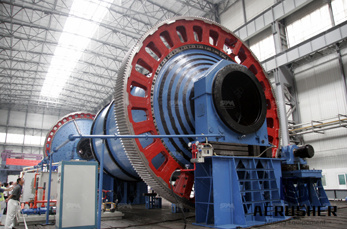
Cement can be defined as the bonding material having cohesive adhesive properties which makes it capable to unite the different construction materials and form the compacted assembly OrdinaryNormal Portland cement is one of the most widely used type of Portland Cement
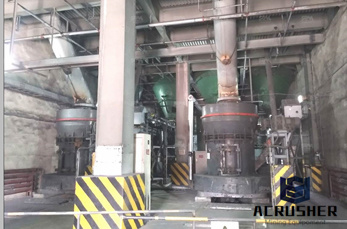
The major cements composition and properties Portland cement Chemical composition Portland cement is made up of four main compounds tricalcium silicate 3CaO · SiO 2 dicalcium silicate 2CaO · SiO 2 tricalcium aluminate 3CaO · Al 2 O 3 and a tetracalcium aluminoferrite 4CaO · Al 2 O 3 Fe 2 O 3
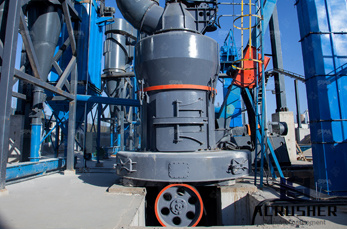
Chemical Properties of Cement The raw materials for cement production are limestone calcium sand or clay silicon bauxite aluminum and iron ore and may include shells chalk marl shale clay blast furnace slag slate Chemical analysis of cement raw materials provides insight into the chemical properties of cement Tricalcium aluminate C3A
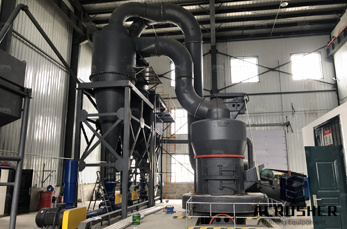
Oct 04 2018· The following physical properties should be checked before selecting a Portland cement for the civil engineering works 1 FINENESS It is measured in terms of percentage of weight retained after sieving the cement through 90 micron sieve or by surface area of cement in square centimeters per gramme of cement
Lafarge portland cement is a high quality costeffective basic building material used in virtually all forms of construction from hospitals and homes to schools tunnels and airports Lafarge portland cement meets or exceeds all applicable chemical and physical requirements of CSA A3000 and ASTM C150
Cement can be defined as the bonding material having cohesive adhesive properties which makes it capable to unite the different construction materials and form the compacted assembly OrdinaryNormal Portland cement is one of the most widely used type of Portland Cement The name Portland cement was given by Joseph Aspdin in 1824 due to its similarity in
In the most general sense portland cement is produced by heating sources of lime iron silica and alumina to clinkering temperature 2500 to 2800 degrees Fahrenheit in a rotating kiln then grinding the clinker to a fine powder The heating that occurs in the kiln transforms the raw materials into new chemical compounds
Portland pozzolana cement is prepared either by grinding clinker and pozzolana or by blending Portland cement and fine pozzolana The proportion of pozzolana
Properties of Portland Pozzolana Cement The very first property it liberates only a small amount of heat and it can offer more resistance to attack of aggressive can reduce leaching of calcium hydroxide However fly ash and calcined clay are used for changing the property of cement they cant impose any changes to the strength of the hardened concrete
Fineness or particle size of portland cement affects rate of hydration which is responsible for the rate of strength gain The smaller the particle size the greater the surface areatovolume ratio which means more area available for watercement reaction per unit volume
Masonry cement Type I Portland cement with finely ground limestone workable plastic minimal water loss Oilwell cements Slow hardening under high pressure
Portland cement Portland cement was first used in the civil engineering project by Isambard Kingdom Brunel as the lining of the Thames Tunnel Properties of Concrete Portland cement is produced by mixing ground limestone clay or shale sand and iron ore This mixture is heated in a rotary kiln to temperatures as
WhatsApp)
 Online Chat
 Sales Hotline